
A Food Tour With Allergies: Four Questions, and What a Vague Answer Tells You
A severe allergy is the one requirement food tour operators refuse out loud, and the refusals are more useful than the yeses. What EU law obliges a stall to tell you, the four questions to send before you pay, and how to read a vague reply.
Booking a food tour with allergies turns up one of the few places in travel where a company's own website tells you to stay away. Devour Tours, which runs walks across Spain, Italy and Portugal, puts it in the frequently asked questions under its own name.
For guests with severe food allergies, we recommend avoid taking a food tour and being very careful with all food in a foreign country, which isn't always labelled to U.S.-standards.
That sentence is not a legal disclaimer buried in terms and conditions. It sits in the FAQ, where people go to be reassured. And the pattern repeats across the better-known operators: a severe allergy is the one requirement the trade turns down out loud, while a vegetarian or a gluten-free request gets a yes with a caveat.
Our guide to allergies and dietary needs sets out the whole picture, country by cuisine. This piece does the narrower job that nothing on the first page of results does: the words to send before you pay, and how to grade the reply that comes back. Because the reply is where the information is, and most of the replies are worthless.
Preference, intolerance, allergy: the word you use changes the answer
Almost every article on this subject treats these as three intensities of the same thing. They are three different requests, and an operator hears them differently.
A preference is a substitution. You do not eat pork, so the fourth stop gives you the aubergine instead, and nothing about the tour changes. An intolerance is an avoidance: you will be unwell later if you get it wrong, and the cost of an error is a bad evening. A severe allergy is neither. It asks the operator to guarantee the absence of something in food cooked by people who do not work for them, on equipment they have never seen, in a kitchen they cannot inspect. No amount of goodwill produces that guarantee, which is why the honest companies decline.
So the first practical move is to stop using the word dietary. It is the word every booking form offers and it collapses all three requests into one box. If you have a medical allergy, say allergy, say the substance, and say what a trace does. If you have a preference, say preference. An operator who reads dietary requirements: no dairy has no idea whether to swap a cheese or to telephone a stallholder.
What a food tour with allergies is actually asking of the law
There is a right here, and it is narrower and stranger than people assume. In the European Union, which covers six of the sixteen destinations on this site, allergen information on food sold without packaging is governed by Regulation (EU) No 1169/2011. Article 44 is the provision that reaches a food tour, and it is worth reading closely rather than in summary.
Article 44(1)(a) makes one particular compulsory for non-prepacked food: the one in Article 9(1)(c), which is the declaration of any ingredient from a list in Annex II, still present in the finished product, even if in an altered form. Article 44(1)(b) then says the rest of the mandatory particulars are not compulsory unless the member state adds them by national measure. Among the particulars that fall into that second category is the list of ingredients itself.
Read that twice, because it is the whole shape of the thing. At a stall or a trattoria counter in the EU, the allergens are the only part of the recipe anyone has to tell you. Not what is in the dish. Just whether it contains one of the substances on a closed list. And the obligation is to inform, never to prevent: nothing in the regulation asks anyone to keep your dish away from a shared fryer.
The reach is wider than most travellers expect, though. The regulation's own definition of a mass caterer, in Article 2(2)(d), is any establishment (including a vehicle or a fixed or mobile stall). The cart is covered. Asking the man with the griddle is not rudeness, and in six of our destinations it is the thing the rule exists to make possible.

One more limit, and it is the one that sends people home with the wrong idea. Article 44(2) leaves each member state to decide how the information is given. It can be on the menu, on a sign, or only on request. We have not read the national measures of the individual countries, so this article does not tell you what Italy or Greece adds on top. Assume you will have to ask, and ask.
The list is closed, and it names eight nuts
Annex II holds fourteen entries. Not fourteen allergies, fourteen entries, several of which are families and two of which carry exemptions written into them. If your allergen is not on the list, no European stallholder owes you a word about it.
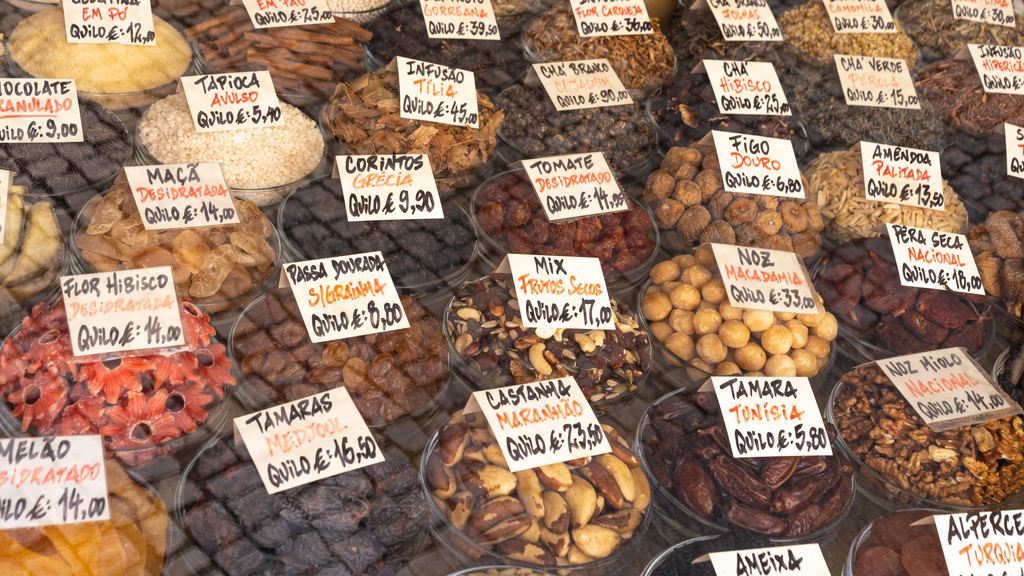
Entry 8 is where this bites. It reads Nuts, namely: and then names eight species: almonds, hazelnuts, walnuts, cashews, pecans, Brazil nuts, pistachios and macadamias. A pine nut is not among them. Neither is a chestnut, and neither is a coconut. So a pine nut allergy, in the country that puts pine nuts in pesto, has no information right at all. Peanuts sit separately at entry 5, because a peanut is a legume, which is also why a kitchen told "no nuts" may hand you something fried in groundnut oil in perfect good faith.
| Annex II entry | Removed by a vegan menu? | Where it turns up on a food tour |
|---|---|---|
| 2. Crustaceans | Yes | Shellfish stock, the Porto and Athens seafood stops |
| 3. Eggs | Yes | Fresh pasta, mayonnaise, most pastry |
| 4. Fish | Yes | Fish sauce, anchovy, dashi, salt cod |
| 7. Milk, including lactose | Yes | Nearly everything in Naples |
| 14. Molluscs | Yes | Squid, clams, the pintxo counter |
| 1. Cereals containing gluten | No | Phyllo, pita, bread as a utensil in Marrakech |
| 5. Peanuts | No | Hanoi and Bangkok garnishes, groundnut oil |
| 6. Soybeans | No | Soy sauce, tofu, vegan substitutes |
| 8. Nuts (eight named species) | No | Greek desserts, Moroccan pastry, pesto's relatives |
| 9. Celery | No | Stock bases, soffritto |
| 10. Mustard | No | Dressings, cured meats |
| 11. Sesame seeds | No | Tahini, simit, Japanese dressings |
| 12. Sulphites above 10 mg/kg | No | Wine, and dried fruit |
| 13. Lupin | No | Gluten-free flour blends |
A vegan tour removes five of the fourteen, and people read it as all of them
Count the column above. A fully plant-based menu takes out crustaceans, eggs, fish, milk and molluscs. Five of fourteen. The nine that remain include every one of the eight named nuts, both gluten and soy, sesame, celery, mustard, lupin and the sulphites in the wine that a vegan cooking class pours with dinner.
This is not a theoretical worry, and the clearest illustration of it is on our own site. We looked, on 7 October 2026, at the listing for a wholly vegan Greek cooking class in Athens, in a studio whose name is a pun on soy. Its practical notes run to five items. One is about public transport. One is about the group size. One is a medical caution, the only one on the page, and it reads not suitable for people with pacemakers (induction cooker). The hobs get a warning. Soy, sesame, walnuts, phyllo and the included white wine get nothing.
That listing is not careless, and we are not going to pretend otherwise: it is doing what almost every listing does, which is to flag the hazard somebody complained about once. The useful conclusion is about the reader, not the operator. "Vegan" is a statement about animals. It is not an allergen protocol, it carries no cross-contact procedure, and a plant-based kitchen is where some of the heaviest nut and sesame use in the Mediterranean happens, because that is what replaces the dairy.
The notice window, and the four-hour hole in it
Notice is the thing that decides whether anything can be done for you, and it is the thing nobody publishes. The reason is mundane: notice is not paperwork, it is the hours in which somebody telephones a stallholder and swaps a stop. Without those hours a dietary note on a booking is a sentence a guide reads out on the pavement.
Eating Europe, which runs the oldest food tour in Rome, asks on its FAQ that guests notify us of your dietary restrictions upon booking and we will do our best to accommodate your needs. On the same page, a few questions away, is this.
Generally, food tours can be booked up to 4 hours before the tour departs!
Put the two sentences together and the dietary notice period is whatever is left of four hours. That is our arithmetic on their two sentences rather than a policy they have stated, and it is not a trap they set deliberately: the booking window is generous because late booking sells tours. But it tells you what the phrase upon booking is worth as a promise. If you need a stop changed, the calendar is doing the work, not the wording. Book early enough that there is a working day in the gap, and send the note separately by email rather than typing it into a field on a checkout page.
The other half of the same FAQ is the sentence to actually read before you decide, and it is the industry's position in one line: All of our food tours are vegetarian friendly, however it is not always possible to serve vegan, gluten free or kosher food at many of the stops. Vegetarian is a yes. Everything stricter is a maybe, per stop.
The four questions to send before you book a food tour with allergies
These are written to be pasted into an email, in that order. They are built so that a vague answer is visibly vague, which is the only defence against a company that wants your booking more than it wants to think about your evening.
Do not ask "can you accommodate a nut allergy". Everyone can accommodate anything, in the sense that nobody will be forcing a walnut on you. Ask instead:
- Which stops contain my allergen, by name? A company that has thought about this can answer per stop, because it has the list in front of it. One that cannot is telling you it has never asked.
- Is anything on this tour cooked on a surface or in oil shared with my allergen? This is the cross-contact question, and it is separate from the recipe question. Use the phrase cross-contact, not cross-contamination: it is the term specialists use for your situation rather than for general hygiene.
- By what date do you need to know, and what changes after it? The second half is the real question. "At booking" is not a date.
- If you cannot do it, will you refund me, and in writing? Get this before you pay. A dated leisure booking in the EU has no fourteen-day cooling-off right, so the refund you get is the one the seller offers.
| What you asked | Why it matters | What a vague answer means |
|---|---|---|
| Which stops contain it, by name | Only a per-stop answer proves somebody checked the route rather than the brochure | "We'll let the guide know" means the route has not been looked at and will not be changed |
| Shared surfaces, oil, fryer | Recipe and contact are different risks; the second is the one that sends people to hospital | "Everything is freshly prepared" answers a hygiene question you did not ask |
| The deadline, and what changes after it | The hours are what buy a substituted stop | "Just mention it at booking" with a four-hour booking window is no notice at all |
| Refund if you cannot | There is no statutory cooling-off period on a dated tour | "We'll do our best to accommodate" is goodwill, and goodwill is not a refund policy |
| Nothing: the listing already says vegan | A plant-based menu removes five of the fourteen listed allergens | Silence about nuts, sesame, soy and gluten is the normal state of a vegan listing, not a clearance |
The part no operator can fix, however well they answer
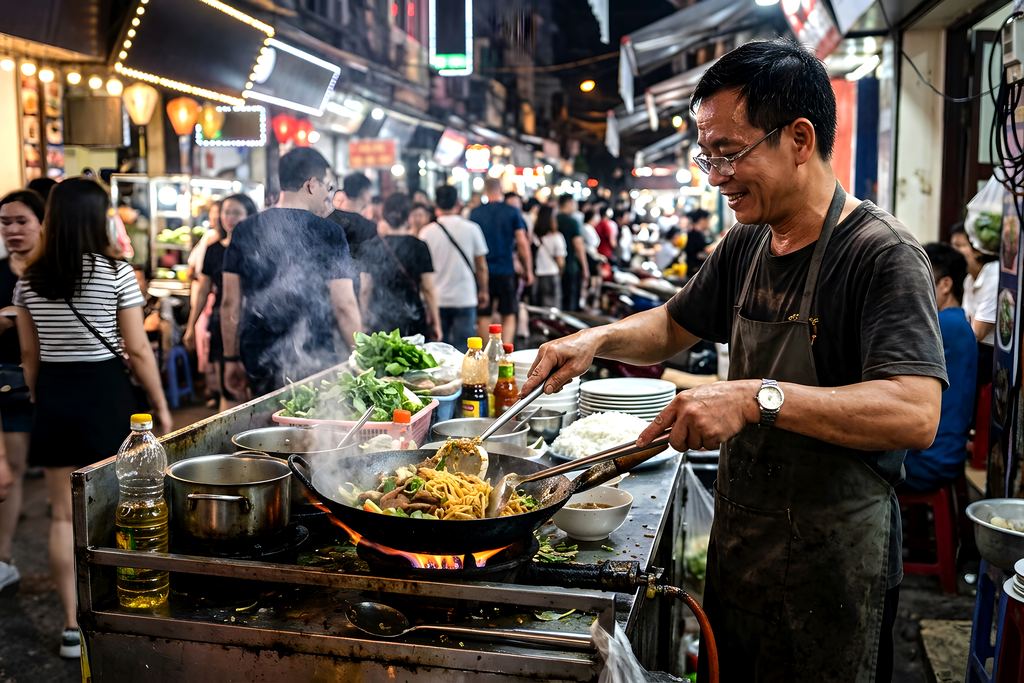
A walking tour is four to eight kitchens that belong to other people. The wok goes from a prawn dish to a vegetable one with a wipe, the fryer does the croquettes and the fish, the griddle has been running since eleven. The guide has no authority over any of it and is standing in a queue like everybody else.
This is why the operators that say no are the ones paying attention, and why the structure of the thing you book matters more than the answer you get. One kitchen with one cook, where the shopping list is written in front of you, is a different risk from eight stalls at nightfall. Our page on eating street food without getting ill has the agencies' own position on where the risk actually sits.
What 429 listings say when you search them for this
We searched the text of every live experience on this site on 7 October 2026. These are counts of our own listing pages, which we write from each operator's own notes, so they measure what a buyer can read here rather than what an operator declares to the booking system. Out of 429:
- 149 mention vegetarian, and 78 vegan.
- 93 mention gluten.
- 68 mention an allergy or an allergen at all. Which leaves 361 that say nothing.
- 14 mention cross-contamination.
- 10 use the phrase severe allergy, almost always to decline it.
- 2 name a nut allergy specifically.
Two listings out of four hundred and twenty-nine. The single most common severe food allergy in the world is named on under half a per cent of the things we sell, and that is not a defect of this catalogue in particular: the listings are the operators' own material, and the operators are not writing about it.
The most complete note we found is on a Rome walk through Testaccio, where the operator's own text does three separate things in one paragraph. It offers to try, for preferences. It declines severe allergies, saying the experience isn't suitable for those with severe or life-threatening food allergies to ingredients found on the tour. Then it disclaims responsibility for allergies and intolerances altogether. Read it as three sentences rather than one and it is genuinely useful: a yes, a no, and a limit of liability, in the right order.
The card in your pocket, and why there are no translated phrases on this site
For a serious allergy the most effective thing you can carry is a written card in the local language, and the reason it works is unglamorous. It removes your accent, the noise of a market and the guide's second-hand summary from a chain of three handovers.
We do not print translated medical phrases here, and the decision is deliberate. A subtly wrong translation of "even a trace makes me seriously ill" is worse than no sentence, and across the scripts our sixteen destinations use we are not in a position to stand behind ours. Use a card produced by somebody who has had it reviewed by native speakers.
Whoever makes it, a card earns its place by naming the allergen in its local forms rather than in translation, which is the part machine translation gets wrong and the part a food market punishes. Then it has to say that a trace is enough, because a request without that line reads as a preference everywhere. Then it asks about the oil, the surface and the fryer instead of the recipe. Our glossary has the counter words that come back at you once you have asked.
If the answer is no, change the shape of the booking
A straight no from a careful company is worth more than a warm yes from one that has not thought about it. There are two things to do with it, and neither is giving up on eating well.
Switch format. A cooking class is one kitchen, one cook and a shopping list you watch being used, and it is a far more tractable problem than a walk. Devour is blunt about where that stops, mind: its own FAQ says Our Pasta Making Class, by its nature, is not suitable for celiacs nor is the pizza-making part of our Rome Food Tour. A class removes the uncontrolled kitchens. It does not remove the flour.
Then change the cuisine. This is the lever almost nobody pulls, and it is the strongest one. Greek cooking is the easiest in Europe for someone excluding things, for a religious reason rather than a dietetic one: the Orthodox fasting calendar removes meat, dairy and eggs for a large part of the year, so nistisima dishes are standard taverna repertoire rather than a special request. A kitchen that cooks without dairy forty days a year does not need the concept explaining. Ask for the fasting dishes by name.
The 14 Athens cooking classes on this site are, for our money, the best structure in the catalogue for anyone who has to ask questions before they eat. Greek food is also deep in sesame and walnuts, so the questions above still get sent. They just get sent to one cook, in one kitchen, with a list.
Four Athens classes: one kitchen, one cook, one list
The four most reviewed cooking classes in Athens, read on 7 October 2026. Chosen for the shape of the booking rather than for any dietary claim: in each one, the person cooking is the person you can ask.
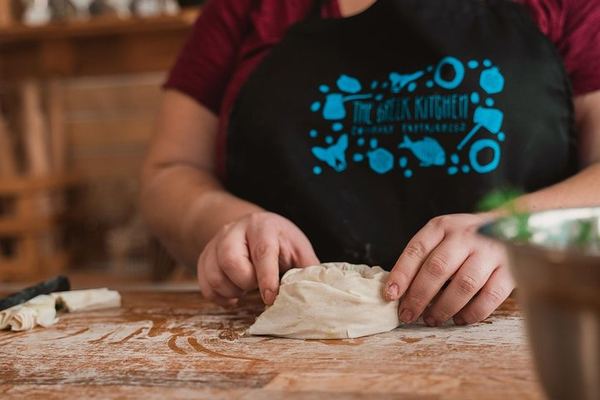
The Greek Kitchen Cooking Class in Athens with Market Walk
A four-hour class with Athenian home cooks on Athinas Street, opened by a thirty-minute walk through the central market. Ten places, recipes to take home.
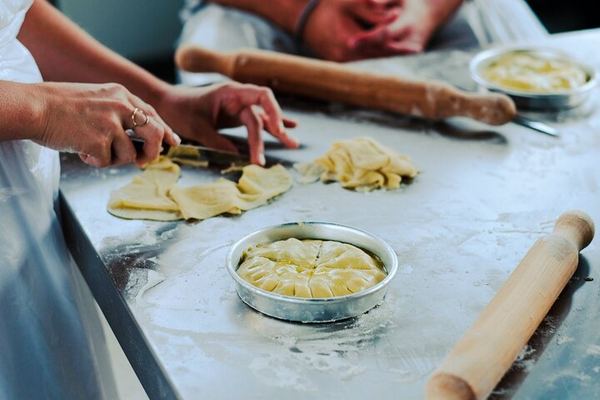
Psirri Rooftop Cooking Class in Athens: Moussaka and Phyllo Pies
Moussaka, spanakopita and milk pie made from scratch in Psirri, then eaten on a rooftop with the Parthenon lit up across the way. Dinner included, from 4pm.
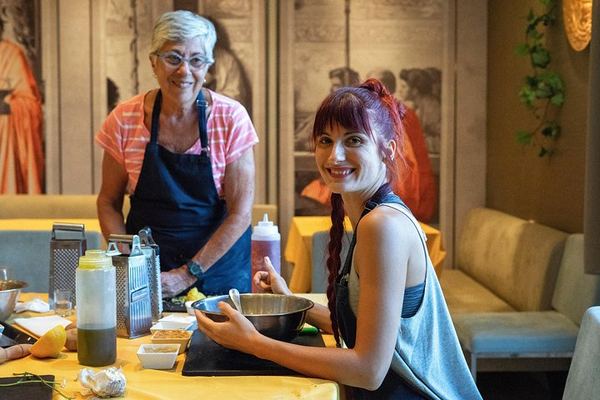
Thissio Cooking Class in Athens: Greek Family Recipes and Dinner
Four hours in a restaurant kitchen on Apostolou Pavlou below the Acropolis, cooking family recipes, then sitting down to starters, a main and dessert.
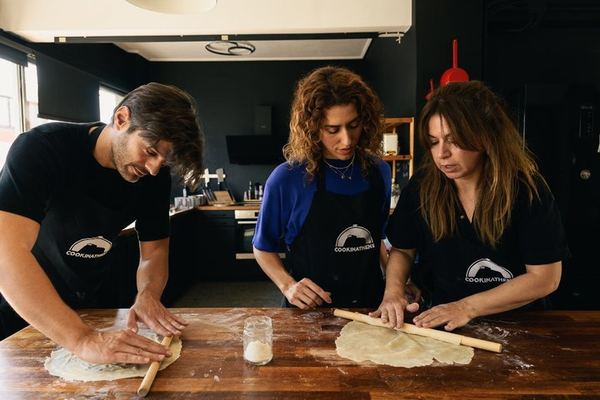
Athens Cooking Class in Pairs: Handmade Phyllo and Moussaka
Roll your own phyllo, then dolmades, tzatziki, Greek salad and moussaka or pastitsio, eaten with handmade sourdough and Greek wine, the Acropolis in view.
Ratings collected by Viator and Tripadvisor
The questions people actually type
Can I do a food tour with a food allergy?
With a mild allergy or an intolerance, usually yes, with notice and a per-stop conversation. With a severe or anaphylactic allergy, several of the best-known operators tell you in writing not to, and they are the ones being straight with you. Devour Tours' own FAQ recommends that guests with severe food allergies avoid taking a food tour at all. The food on a walking tour is cooked in four to eight kitchens the company does not control, on shared surfaces, by people who do not work for them. A private departure or a cooking class, booked with enough notice that a stop can actually be changed, is a far better structure than a group walk.
Can I do a food tour with a nut allergy?
Ask per stop, and ask about oil and surfaces separately from recipes. Two things make this harder than it looks. Of the 429 experiences on this site, two name a nut allergy specifically, so the listing will almost never answer you. And in the EU, the legal allergen list names eight tree nuts by species: almonds, hazelnuts, walnuts, cashews, pecans, Brazil nuts, pistachios and macadamias. Pine nuts, chestnuts and coconut are not on it, and peanuts are a separate entry because a peanut is a legume. A kitchen told "no nuts" is not necessarily hearing what you mean.
Is a vegan food tour safe if I am also coeliac or allergic to nuts?
No, and this is the commonest mistake in this corner of travel. A plant-based menu removes five of the fourteen substances on the EU allergen list: crustaceans, eggs, fish, milk and molluscs. The other nine stay, and they include gluten, peanuts, soy, all eight listed tree nuts, sesame, celery, mustard, lupin and the sulphites in wine. Plant-based cooking often uses more nuts and sesame than the cooking it replaces, because something has to do the job the dairy was doing.
How much notice does a food tour need for a food allergy?
Most operators say "at booking" or "in advance" and give no number, which is the problem. Where a number exists in the industry it tends to be 48 hours or a week. Treat a week as the safe assumption for anything medical, and note what the vagueness permits: one major operator asks for dietary restrictions "upon booking" on the same FAQ page that says its tours can generally be booked up to four hours before departure. Send the note by email, separately from the checkout field, and ask what changes after their deadline.
Does a street food stall in Europe have to tell me about allergens?
Yes. Regulation (EU) No 1169/2011 makes the allergen declaration compulsory for food sold without prepackaging, and its definition of a mass caterer expressly includes "a vehicle or a fixed or mobile stall". Two limits matter. The obligation is to inform, not to prevent cross-contact, so nobody has to keep your dish out of a shared fryer. And each member state decides how the information is given, so it may be on a sign, on the menu, or only when you ask. Outside the EU there is no equivalent you can lean on.
Will a food tour refund me if they cannot handle my allergy?
Only if they say so, and you want that in writing before you pay. A dated leisure booking is carved out of the EU's fourteen-day right of withdrawal, so there is no statutory cooling-off period to fall back on: the refund available is the one in the operator's own terms. Ask question four above, keep the reply, and be aware that "we will do our best to accommodate your needs" is a statement of goodwill rather than a refund commitment.
Which cuisines are genuinely hard, and which are not
This piece is the booking conversation. The guide behind it rates all sixteen destinations for the four commonest requirements, and explains the trap in each one.
Data verified on . Regulation (EU) No 1169/2011 read in the Official Journal via the EU Publications Office. Operator FAQs and all 429 listing counts read 7 October 2026.