
White Truffle Season in Italy Is Set by Law, and Tuscany Has Moved Its Dates
Italy's white truffle window is not a matter of taste. Law 752/1985 fixes it at 1 October to 31 December and bans the trade in fresh truffle outside it. And Tuscany, which used to open on 10 September, has quietly rewritten its own calendar.
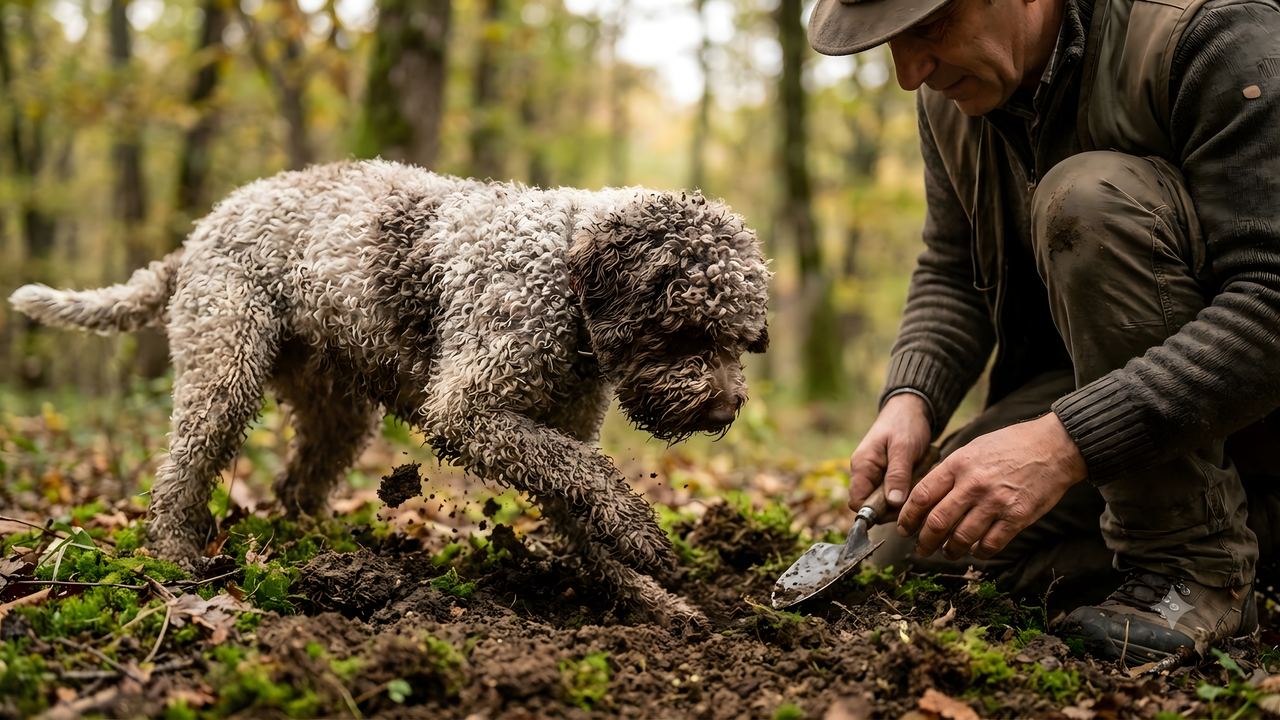
The white truffle season in Italy opened on 1 October, and nothing ripened to make that happen. It opened because a statute says so. Article 6 of Law 752 of 16 December 1985 gives nine species of truffle a harvesting window each, and the first entry on the list is Tuber magnatum, the Alba white truffle, from 1 October to 31 December.
Search for when truffle season starts and you get restaurant pages and agency pages answering with a word: autumn. The real answer is a date, it is the same date every year, and it has nothing to do with the weather.
The sentence that decides what you can actually eat is the last paragraph of the same article.
È comunque vietata ogni forma di commercio delle varie specie di tartufo fresco nei periodi in cui non è consentita la raccolta. (Every form of trade in the various species of fresh truffle is prohibited in the periods when harvesting is not permitted.)
Prohibited, not discouraged. That is why this calendar is visible to a customer at all. A Tuscan restaurant does not stop shaving white truffle in January out of seasonal good taste. It stops because the fresh product cannot legally be sold.
Preserved truffle is a different legal object with its own articles, its own label and, in article 11, its own sterilisation temperature. That is why a jar can sit on a shelf in July while the fresh thing cannot cross a counter.
What the white truffle season in Italy really is: a trade window, not a harvest
Four of the nine species account for nearly everything a visitor will be offered, and they do not overlap the way people assume.
- Tuber magnatum, the white truffle, 1 October to 31 December.
- Tuber melanosporum, the black winter truffle, 15 November to 15 March.
- Tuber aestivum, the summer truffle or scorzone, 1 May to 30 November. The long one, and the cheap one.
- Tuber albidum or borchii, the bianchetto, 15 January to 30 April. It arrives after the white truffle has gone, it is pale, and it is a separate species with a separate window.
Which one is on the table is not a matter of trust. Article 7 requires that fresh truffles put out for sale carry a printed card giving the Latin and Italian name of each species and variety, and the geographical zone they were gathered in. Species and place, in writing, on the stall. If a market table has no card, that is the question to ask before the price.
The year, species by species
The national calendar. Each cell is a whole month, which rounds the statute: the law works in part-months, and the exact dates are in the table below.
| Month | 1 | 2 | 3 | 4 | 5 | 6 | 7 | 8 | 9 | 10 | 11 | 12 |
|---|---|---|---|---|---|---|---|---|---|---|---|---|
| White truffle (Tuber magnatum) 1 October to 31 December nationally. Tuscany now runs to 15 January, so the first fortnight of January is Tuscan ground only. | 1 | 2 | 3 | 4 | 5 | 6 | 7 | 8 | 9 | 10 | 11 | 12 |
| Black winter truffle (Tuber melanosporum) 15 November to 15 March, and Tuscany has kept the same dates. The one species the 2023 reform left alone. | 1 | 2 | 3 | 4 | 5 | 6 | 7 | 8 | 9 | 10 | 11 | 12 |
| Summer truffle, scorzone (Tuber aestivum) 1 May to 30 November nationally. Tuscany allows June to August and October to November only, because May and September are now closed there for every species. | 1 | 2 | 3 | 4 | 5 | 6 | 7 | 8 | 9 | 10 | 11 | 12 |
| Bianchetto (Tuber borchii) 15 January to 30 April nationally, 15 January to 15 April in Tuscany. It is the truffle on offer in late winter, when the white one has been illegal to sell for weeks. | 1 | 2 | 3 | 4 | 5 | 6 | 7 | 8 | 9 | 10 | 11 | 12 |
Law 752/1985 art. 6, and Tuscan regional law 36/2023 art. 8 for the January extension. Read in their official texts on 14 October 2026.
Tuscany used to open three weeks early, and that is over
Until recently the single most useful fact in this subject was that Tuscany ran ahead of everyone. Regional law 50 of 1995, article 13, let the white truffle be searched for across the region from 10 September, three weeks before the national date. Guides still repeat it. Ours does. It is no longer true.
Regional law 36 of 2 August 2023 replaced the 1995 act, and its article 8 writes a new calendar. The Tuscan white truffle now runs from 1 October to 15 January. The head start has gone from the front of the season and a fortnight has been added to the back of it.
Then the second paragraph of that article does something nobody saw coming. Searching and gathering, of every species, is banned across the whole region for the whole of May and the whole of September. The law names it: fermo ecologico, a closed season for the ground rather than for any one truffle.
The switch was tied to a regulation rather than to a date. Article 23 says the new law applies from the day the implementing regulation under article 20 enters into force, and that the 1995 act is repealed on that same day. The regulation is Decree 2/R of 8 January 2025, published in the Bollettino Ufficiale della Regione Toscana of 10 January 2025. So this autumn is not the first run under the new rules, and the 10 September that is still all over the internet has been wrong for two seasons.
What that means for a trip is narrow and concrete. A Tuscan truffle hunt offered for a date in September cannot legally include the hunt. In October the Tuscan and national windows finally agree with each other. And in the first half of January, when Piedmont has closed, Tuscany is still open.
| Species | Italy (Law 752/1985) | Tuscany (regional law 36/2023) | What changed |
|---|---|---|---|
| White truffle, Tuber magnatum | 1 Oct to 31 Dec | 1 Oct to 15 Jan | Tuscany opened on 10 September under the 1995 act. It now starts with the rest of Italy and finishes a fortnight later. |
| Black winter truffle, Tuber melanosporum | 15 Nov to 15 Mar | 15 Nov to 15 Mar | Nothing. |
| Summer truffle, Tuber aestivum | 1 May to 30 Nov | 1 Jun to 31 Aug, then 1 Oct to 30 Nov | Cut in two by the new May and September closures. |
| Bianchetto, Tuber borchii | 15 Jan to 30 Apr | 15 Jan to 15 Apr | Two weeks shorter than the national window. |
| Every species | No month is closed to all of them | No searching at all in May or September | The fermo ecologico, new with the 2023 act. |

The hours are in the law too
Article 8 does not stop at months. It sets the hours of the day, in solar time, when searching is allowed, and they shrink as the light does: 5.30 to 18.30 in October, 6.30 to 17.30 in November, 7.00 to 17.30 in December, adjusted while summer time is running. Article 7 then lists searching outside those hours among the things that are flatly prohibited, alongside turning over the soil and taking unripe truffles.
The same article is unexpectedly specific about method, and it explains most of what you are watching if you have paid to stand in a wood. Searching is done with the help of at most two dogs, one of which may be in training. Digging is done with a vanghetto, whose blade may be no more than five centimetres by five. The hole is refilled with the same soil, at once. And the person doing it has to hold a tesserino issued by the region and be up to date with its annual payment.
So the hunter with the muddy dog is a licence holder working inside a timetable. The careful refilling of the hole is not showmanship for the group. It is the condition of being allowed to be there.

Ninety-two days, and eighteen of them are a market
Everything here narrows to a short stretch of the year, and it is worth saying how short. Nationally the white truffle is legal to sell for 92 days. In Tuscany, with the new January tail, 107. The Alba fair covers 58 of them, and its market is open on 18.
That arithmetic is why the experiences built around it behave unlike the rest of this catalogue. A food walk in Rome runs all year and can be booked the night before. A truffle day has a shelf life measured in weekends, and it is sold to people who have arranged a trip around it. Our calendar of the food traveller's year gives you the month. This is the statute underneath it.
Alba: a market with a panel of judges at the door
Alba is where the whole calendar points, and the 96th Fiera Internazionale del Tartufo Bianco d'Alba runs from 10 October to 6 December 2026. Two things on the organiser's own pages are worth having before you book a train.
The first is the opening. The Alba White Truffle World Market is open on Saturdays and Sundays only, 9.30 to 19.30, last entry at 19.00, in the Cortile della Maddalena with the entrance from Piazza Falcone. A full ticket is €6, under-15s go free, and groups over thirty pay €4.50 booked online. A midweek visit to Alba is a visit to a town with a fair on. The market itself is a weekend.
The second is what happens to a truffle before it reaches a table, and it is the part worth travelling for. The Municipality of Alba appoints a committee of experts each year and issues a regulation that every seller at the fair, hunter or trader, has to work under. Inside the market a panel of sensory analysis judges sits through the opening hours, and the sequence is published: the hunters hand the truffles over, the judges assess them, a sensory analysis is carried out, the ones found fit for sale are weighed and counted, and each goes into a numbered bag.
The code on the bags allows the buyer to change the truffle within 48 hours if considered unsuitable for consumption.
A numbered bag and a right to swap is not how most food is sold anywhere, and it is most of what separates buying in the Cortile from buying in a shop with a nice window. The judges are drawn from the Centro Nazionale Studi Tartufo, and the organiser says plainly that an inexperienced buyer should ask them for help before paying. Take that literally. It is a free service staffed by the only people in the room with no stake in the sale.
What a white truffle season in Italy costs: €335 for seven hours
The most expensive single experience we sell in Florence is a truffle hunt, and the number deserves to be put next to the others rather than admired on its own.
It runs out to San Miniato, which is the Tuscan town the white truffle comes from, with a working hunter and her Lagotto Romagnolo. Seven hours door to door from Florence, eight people at most, lunch of tagliolini al tartufo at the family villa, a Chianti tasting on the drive back. Read on 14 October 2026 it carried 139 reviews at an average of 5.0, and the price was €335.
Two of our own numbers put that in proportion. Across the 429 experiences on this site the median price is €69 and the median hourly rate is €19.70. This one works out at roughly €48 an hour, two and a half times the catalogue. It is also one of the fifteen experiences out of 429 that cannot be cancelled at all. The operator's policy is four words: all sales are final.
Whether that is worth it depends on what you think is being sold, and it is not truffles. The thing a food tour sells is rarely the food, and here it is a licence holder, a trained dog, private woodland in the weeks the law is open, and a cooked lunch. The listing promises the hunt, the meal and the tasting. It does not promise a truffle, and it could not.
The non-refundable line matters more than the price. Most food experiences are a short-notice purchase: 413 of our 429 can be cancelled free until the day before. A truffle day in October is the opposite, a fixed point booked weeks ahead, and the one thing you cannot do with it is change your mind.

Flavoured oil sits outside all of this
The commonest thing a visitor carries home from truffle country is a small bottle of oil, and it is the one product in this article the truffle law does not reach.
Follow what the statute actually governs. Fresh truffle, article 7: the printed card, the species in Latin and Italian, the zone of collection. Preserved truffle, article 9: a sealed container with the packer's name, where the plant is, the species in Latin and Italian, the grade and the drained net weight in grams. Article 11 permits water, salt, and if you like wine, liqueur or spirit, obliges any other substance to be declared on the label, and bans colouring agents outright.
A flavoured oil is neither of those things. It is not fresh truffle and it is not preserved truffle, so none of those duties attach, and the question of what is in the bottle drops back to ordinary food labelling. Read the ingredient list. It is a dull answer, and it is the whole answer. Our page on food stories checked against the documents has more of this kind of thing, where the folklore and the paperwork disagree.
The hunting is on a UNESCO list, the selling is in a statute
In 2021, at its sixteenth session, the UNESCO committee inscribed "Truffle hunting and extraction in Italy, traditional knowledge and practice" on the Representative List of the Intangible Cultural Heritage of Humanity, file 01395. The inscription is about the knowledge and about the working relationship between a hunter and a dog. It says nothing about the product.
Put the two instruments side by side and the shape is slightly strange and rather good. One protects the practice of finding the thing. The other shuts the market for most of the year so that what is sold in the open months is what it claims to be. Between them they are why the dates in this article are worth more than the ones on a restaurant's homepage.
One limit on everything above, and we would rather state it than let you find it. Article 6 lets a region vary the national calendar by ordinance after consulting specialist research centres. We read the Tuscan law in full because Tuscany is where the famous exception lived. We have not read all twenty regions. If you are going elsewhere in Italy for the truffle, treat the national dates as the floor and check the region.
Four Tuscan days with a date on them
Read from the Florence categories on 14 October 2026. The truffle hunt is the subject of this article; the other three are built on the second Tuscan harvest with a deadline, the olive oil, which the Chianti Classico rules require to be pressed from olives picked by 31 December.
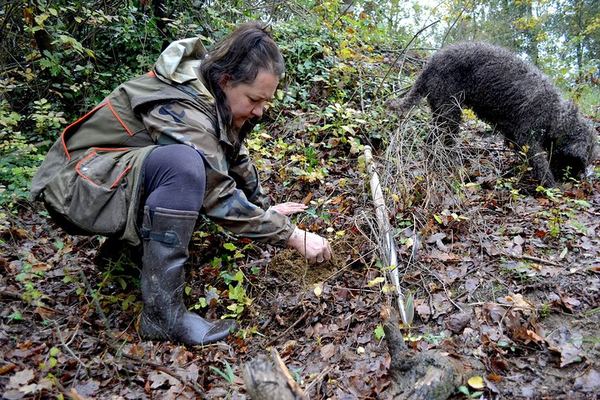
Truffle Hunting at San Miniato with Francesca and Her Dog
Out with a working hunter and her Lagotto Romagnolo in the woods above San Miniato, then tagliolini al tartufo and a Chianti wine tasting. Eight people.
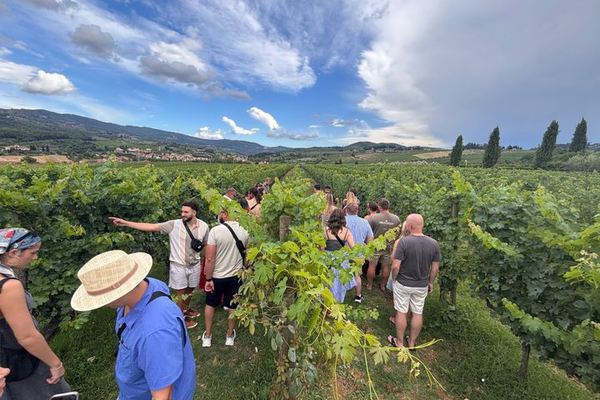
Two Chianti Wineries from Florence: Eight Wines and Olive Oil
Four wines and an olive oil at each of two family estates, with cheese, salami and bruschetta at the second. Half a day, back in Florence by 1.45 or 7pm.
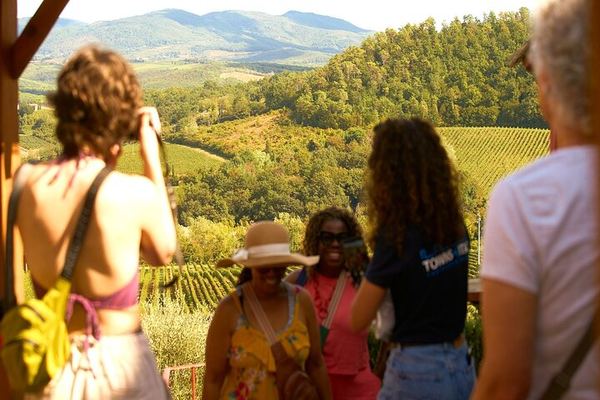
Chianti Wine and Olive Oil Tour with a Mill and Two Estates
An olive oil mill at a noble estate, a boutique winery blending Sangiovese and Canaiolo, a Chianti village, and a three-course lunch at a second estate.
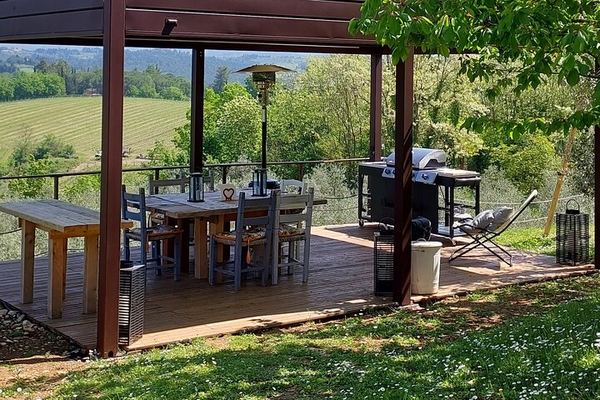
Cooking Class on a Chianti Farm That Grows What You Cook
The saffron, the oil, the vegetables and the eggs come off this farm, and you cook with them outdoors above the vineyards when the weather allows. Four hours.
Ratings collected by Viator and Tripadvisor
The questions people actually type
When does white truffle season start in Italy?
1 October, nationally, and it ends on 31 December. The dates come from article 6 of Law 752 of 1985, which sets a harvesting calendar for nine species of truffle, and the first entry on that list is Tuber magnatum, the white truffle. The same article bans every form of trade in fresh truffle during the months when harvesting is not permitted, which is why the season is something a diner can see rather than something a chef decides. Regions may vary the calendar by ordinance, so the national dates are a floor rather than a promise.
Is Tuscany still three weeks ahead on white truffle?
No, and this is the fact most pages have not caught up with. Under the old regional law 50 of 1995, Tuscany opened the white truffle on 10 September. Regional law 36 of 2 August 2023 replaced that act, and its article 8 sets the Tuscan white truffle window at 1 October to 15 January. The change took effect with the implementing regulation, Decree 2/R of 8 January 2025, published in the regional bulletin on 10 January 2025. Tuscany now opens with everyone else and closes a fortnight later, and searching is banned there for the whole of May and the whole of September.
Can you buy fresh white truffle in Italy in summer?
Not legally. Article 6 of Law 752/1985 prohibits every form of trade in fresh truffle of any species during the periods when its harvest is not permitted, and the white truffle's permitted period is October to December. What you can buy in July is preserved truffle, which the same law treats as a separate product with its own labelling and sterilisation rules, or a different species that is in its own window, such as the summer truffle. If a menu offers fresh white truffle in July, ask which species it is and look for the printed card that article 7 requires.
When is the Alba truffle fair in 2026, and is the market open every day?
The 96th edition runs from 10 October to 6 December 2026. The market is not open every day: the Alba White Truffle World Market opens on Saturdays and Sundays only, 9.30 to 19.30, with last entry at 19.00, in the Cortile della Maddalena with the entrance from Piazza Falcone. A full ticket is €6, under-15s are free and groups over thirty pay €4.50 online. Over the 58 days of the fair that comes to 18 market days. Dates and hours read on the organiser's own site on 14 October 2026; check it again before travelling.
Is a truffle hunt worth €335?
That is the price of the Tuscan hunt on this site, read on 14 October 2026: seven hours from Florence to San Miniato and back, eight people at most, a hunter with a Lagotto Romagnolo, lunch and a wine tasting. It works out at about €48 an hour against a catalogue median of €19.70, and it is one of fifteen experiences out of 429 here that are not refundable at all. What you are buying is access and company rather than produce, because no hunt can promise a find. If that sounds thin, the honest alternative is the market in Alba, where €6 gets you in and the judges will tell you what you are looking at.
The rest of the food year, month by month
The truffle is one window among many, and most of the others are fixed by a rule rather than by the weather. The guide behind this piece runs through all sixteen destinations.
Data verified on . Law 752/1985 and Tuscan regional law 36/2023 read in their official texts; Alba dates, hours and market rules from the organiser's site; catalogue figures read 14 October 2026.


