Are Food Tours Worth It? What You Are Buying Is Rarely the Food
Every answer to this question comes from somebody with a tour to sell, ours included. Here is the useful version: a guided meal almost never buys better food. It buys the price, the door, a licence or the drive, and knowing which one you are paying for is the whole decision.
Are food tours worth it? Put the question in a search box and almost every answer on the first page comes from somebody with a tour to sell. We sell them too, 429 of them, which is the reason to say so in the first line rather than the last.
The honest answer is not yes or no. It is that a guided food experience almost never buys you better food. It buys one of four other things, and which one depends entirely on the city. Those four are separate trades at separate prices: the median on our own destination pages runs from €25 to €165 for what is sold as the same three-hour product. Working out which one you are paying for is the decision.
Everyone answering "are food tours worth it" has a tour to sell
The first page of results for this question is operators, and operators answer yes. That is not dishonesty so much as the shape of the market: the people who have written most about food tours are the people who run them. The dissent lives in forum threads, where nobody is selling anything, and when you read it properly it is more specific than a thumbs down.
Our guide to where a guide pays for itself sets out the criteria. This piece does the other half of the job: the four things a tour buys, the cities where each one is obvious, and what the median costs in each. Every figure with a euro sign came off our own catalogue, and the dates are in the table.
The four things a food tour buys
Across sixteen destinations the useful service changes completely from one city to the next, and the listing copy almost never names it. So here it is, named.
Four trades, four prices
One per city, chosen because in each of these four the service is impossible to miss once somebody points at it.
The price — Hanoi
In the Old Quarter almost nothing on a cart carries a written price. A guide's real job on a Hanoi street food walk is knowing what each bowl should cost, and it is also the cheapest service in the catalogue: the median on that page is €25.
The door — Tokyo
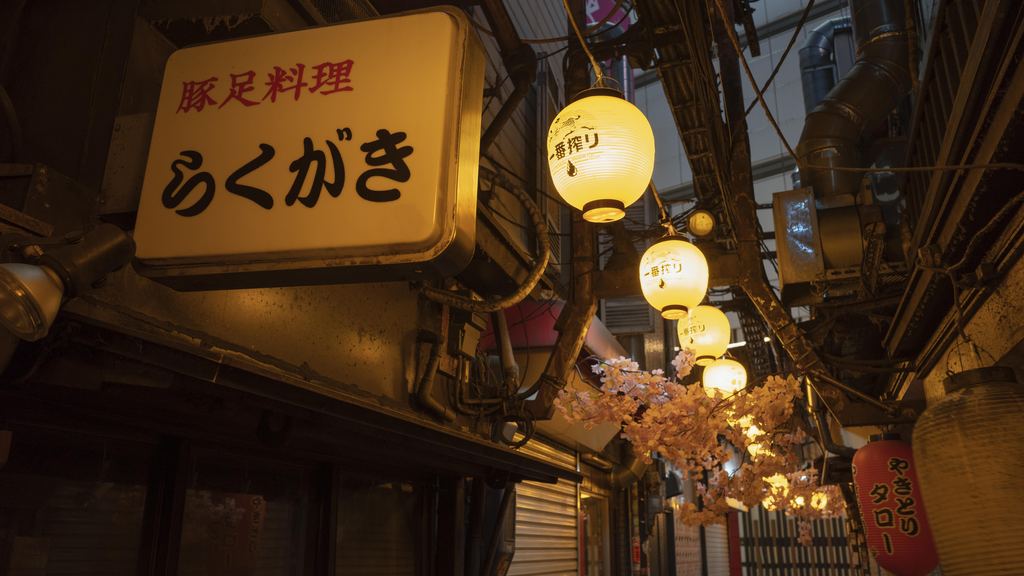
Golden Gai is six lanes of roughly two hundred bars, most seating five or six people, and a fair number will not serve customers they do not know. One listing at €34.36 exists to get you through those doors. Nothing about the food needs help.
The licence — Marrakech
Morocco regulates guiding by statute and the Ministry of Tourism publishes the register of approved guides. What you buy in the medina is a guide who is on that register, rather than one who attached himself to you at the gate.
The drive — Medellín
The coffee farms sit between twenty minutes and three hours outside the city. One listing spends six of its twelve hours in a vehicle. The median is €102, and most of what you are paying for is transport.

Hanoi: what a guide is for when nothing is priced
The Hanoi street food page holds twenty walks running from €5 to €48, median €25. A typical one takes five stops, starting at Dong Xuan market and ending at a café hidden above a lake, and costs €26.18.
At that price the tour is cheaper than being overcharged twice, which is the argument in its plainest form. It is also the only city on this site where the guide's knowledge converts directly into money rather than into comfort. Everything else a Hanoi walk gives you, the stools and the carts and the pho, is standing open on the pavement at seven in the morning. You can find it. What you cannot do on your first evening is tell whether the woman with the ladle has quoted you the local number.
Tokyo: the door, and only the door
Tokyo is the clearest case in the catalogue, because the thing a tour sells there is a physical obstacle. Our own listing for Golden Gai describes six lanes of about two hundred bars, most of them seating five or six, several effectively members' rooms, others posting a seat charge designed to discourage anyone wandering in. It costs €34.36. The median across the twenty Tokyo food tours is €73, and the page runs from €11 to €191.
Tokyo also has the best organised cheap eating of any city here. Nobody needs a guide to find a standing soba counter or a department store basement. What needs a guide is a room with six seats and a house rule about strangers, and that is a narrow, real and perishable service: the price is the price of being let in.

Marrakech: the one city where the licence is the product
Guiding in Morocco is governed by law 05-12, as amended by laws 133.13, 93.18, 67-21 and 19-22, and the Ministry of Tourism publishes the register of approved guides in two categories: city and circuit guides, and guides for natural areas. That is checkable, which is the whole point. One listing on our medina page rests its pitch on exactly that, a licensed guide running his own tour, at €29.65 today after a discount.
The uncomfortable half is on the same page. We counted its fourteen listings on 30 September: three are cooking classes rather than walks, and one is a dinner in the Agafay stone desert thirty kilometres outside the city, at €21.99. Median €38. A medina food tour page that sells you a desert dinner is the reason the licence matters more here than the itinerary.
Medellín: you are buying the road
We counted the twenty Medellín listings on 30 September 2026: €49.32 to €254.73, median €102. The most extreme is twelve hours to Jardín, six of them in the car, at €208.95. Buy one of these and you are buying a working finca an hour out of town and somebody to drive you to it.
Which corrects something we half expected to confirm. The received idea is that a Medellín tour buys you a safe neighbourhood, Comuna 13 in particular. Exactly one of the twenty listings puts Comuna 13 and the coffee in the same day, at €143.48. The rest never enter the city at all. The nearest thing to an exception is an organic farm twenty-five minutes from El Poblado, inside the municipal boundary, at €77.12 with 1,542 reviews, and even that is a place you would not have found and could not easily reach.

Two more versions of the same trade, in cities we do not sell
Our destination research turned up two further variants, and both sit outside this catalogue, so there is nothing to click at the end of them. They are here because they complete the pattern rather than because we can sell against them.
In Kyoto the service is the reservation: some of the high-end kaiseki rooms are reported not to take direct bookings from foreign visitors, or foreign cards, and an intermediary is the only route in. In Osaka it is the language, with a handful of places declining customers who cannot order in Japanese. Both are the door in a different costume. Neither is about cooking, and in neither case would a tour improve the meal by a single degree.
The fifth thing, which sells best and is worth least
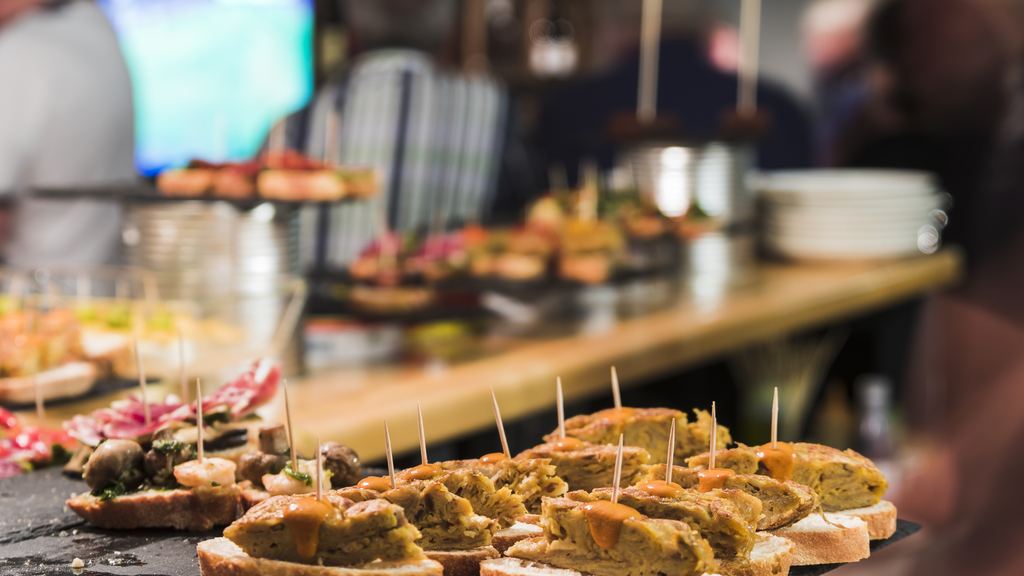
The service most often advertised is finding the good food. In a city where the food is evenly good, that service is close to worthless, and San Sebastián is where it shows.
We counted its twenty listings on 30 September: median €165, against a catalogue median of €69. The cheapest is €12 for ninety minutes of walking and one pintxo at the end. The dearest is €479, a nine-hour private day across the French border. The city with the densest concentration of good counters in Spain is also the most expensive guided evening on this site.
A licensed local guide posting on the Rick Steves community forum, in a thread of five replies in March 2025, put the mismatch better than a price comparison can: "pintxos are not a meal for us, we have them before lunch… it's a way to socialize with family and friends while having a drink." The product being sold as dinner is not treated as dinner by the people who invented it. Another poster in the same thread wrote simply that you can do it yourself, and that the blogs and videos listing the bars already exist.
None of which means the guided evening buys nothing. It buys two things, and neither is the pintxos. Several listings hold reserved seats at every stop, which matters because these bars are standing room and three deep by nine o'clock. One listing's entire proposition is that the guide orders for you, which removes the only hard problem in the Parte Vieja: not finding a counter, but choosing off it when every counter is loaded and they all look identical from the street. That is a real service. It is not the service on the label, and at a median of €165 it is worth deciding on deliberately.
| City | What the tour buys | What it does not buy | Median |
|---|---|---|---|
| Hanoi | The price of each bowl, in a quarter where nothing is priced | Access. Every cart on the route is open to anyone | €25 |
| Marrakech | A guide on the ministry's register instead of one who found you | A shorter souk. The route is one you could walk | €38 |
| Naples | A bench, a chef's attention, and dough you did not buy | Street food. The fried cones need no introduction | €63 |
| Tokyo | The door: rooms with six seats and a rule about strangers | The food. Tokyo's cheap eating is the best organised anywhere | €73 |
| Porto | One day in the Douro, nine or ten hours of it | The cellars. Gaia is walkable and one visit is self-guided | €75 |
| Rome | The neighbourhood, chosen for you: Trastevere, the Ghetto, Testaccio | Discovery. Rome is the easiest city here to eat well in alone | €82 |
| Medellín | The road, and a working farm at the end of it | City food. Almost nothing on these pages is in Medellín | €102 |
| San Sebastián | A seat where there are none, and somebody to order | The bars. The Parte Vieja is the most walkable crawl in Spain | €165 |
Where the arithmetic does not work
The recurring complaint in the forums is not that the food was bad. It is that there was not much of it for the money, and one traveller wrote the sum out.
I did a generous calculation and the food offered on the tour was <25% of the total cost we paid.
Four days earlier the same poster had shown his working: he added up what the group ate and, "generously I'll say it was <$20 euros/person (and I'm being generous) and paid over $80 euros for the tour". He opened with "What a waste of money".
One person's arithmetic in one thread is not a measurement, and that needs saying, because this is the figure the internet repeats. The thread ran from March to September 2024, holds more than fifty posts, and most of them are warm. The nearest independent number we could open is older and measures something else: on the same forum in November 2019, a poster set a €140 gourmet tour in Barcelona against an €80 tapas tour and concluded that "the food tour is not worth the extra cost".
Both are counting the wrong unit, and the format invites the mistake. Nobody prices a museum ticket by the weight of the paper. But the complaint is still a useful instrument, because it is what a tour sounds like when it delivered none of the four things. When a tour does deliver one, the food quietly stops being the unit of account, and nobody goes home and adds up the plates.
Where it works: the drive, and the tour that replaces two meals
Porto is the case where the sum comes out the other way. We counted its twenty port and Douro listings on 30 September: median €75. The cheapest full day in the valley is €55 for ten and a half hours on a coach; the private version of the same valley is €259. Nothing in that gap is food. The most reviewed day trip of the set carries 20,418 reviews at 4.9, which is a lot of people buying most of the north of Portugal in one purchase, and it is what a forum Destination Expert meant, in our own destination research, when they said one tour is enough for the whole region.
The second case is blunter. One Porto walk, €75 for four hours, tells you to turn up extremely hungry, because it is built to stand in for lunch and dinner rather than to sample around them. A tour that replaces two meals has to be priced against two meals, and almost nobody does that sum in the right direction. On the same page a Gaia cellar visit costs €25 with no guide, no group and no fixed time: there the €25 is the ticket, and the tour bought nothing at all, which is fine as long as you knew.
Are food tours worth it more on the first day than the last?
The same thread produced the most actionable line in it, and two posters who otherwise disagreed arrived at it separately.
We try and do them on the first day or so of a trip so that we can return to a restaurant if we want.
A second poster in the thread, on 15 April, wrote that she likes a food tour for her first dinner in a new city. The reasoning holds up against everything above. On day one all four things compound. The prices you learn in Hanoi apply to the next four dinners. The bar you liked in San Sebastián is one you can walk back into alone on Thursday. The neighbourhood you were shown in Rome is where you book at the weekend. On the last night none of it has anywhere to go, and the same three hours collapse into a meal, which is the one thing a food tour is poor value for.
What we get out of saying this
We take a commission when somebody books through this site, so this article costs us bookings in San Sebastián and probably in Marrakech. That is a deliberate trade rather than a display of virtue. A reader who books a Tokyo evening because we said it buys the door, and finds that it buys the door, comes back to us for Lima. A reader who books a €165 pintxos crawl on a promise we could not keep, and works out on the second night that the bars were open the whole time, does not.
Which is also why every number on this page has a date and a page behind it. The only claims here we would be embarrassed to defend in a year are the ones we could not count, and we have said which those are.
One tour for each of the four things
Chosen by hand, one per city, because the first four listings on a page would not answer this question. Prices as read on 30 September 2026.
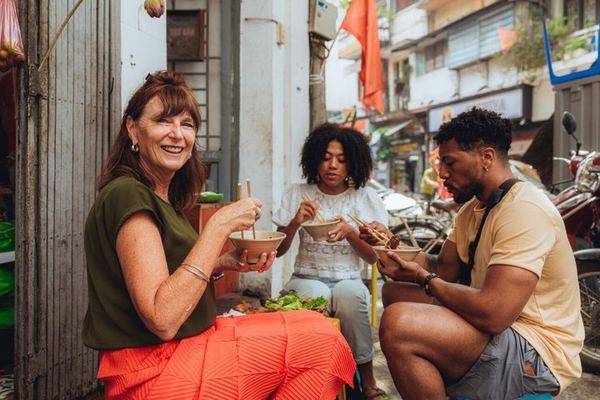
Dong Xuan Market to a Hidden Lake Cafe: Five Hanoi Stops
Starts in the largest covered market in Hanoi, works through the Old Quarter on banh mi, banh cuon, bun cha and grilled nem chua, ends over Hoan Kiem Lake.
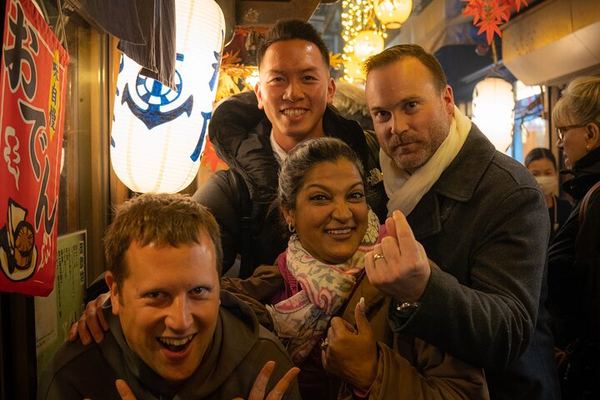
Shinjuku After Dark: Izakayas, Kabukicho and Small Bars
Three hours through Omoide Yokocho and Kabukicho, with Golden Gai and karaoke on some nights. Admission fees at each venue are paid; food and drink are not.
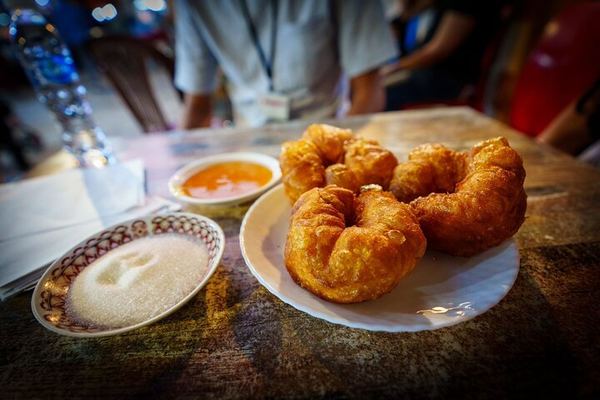
Meula, Chfange and Olives, Guided by Mehdi
Three hours through the Medina with Mehdi, a licensed guide who runs it himself: meula, the Moroccan shakshuka, chfange doughnuts, olives and the barbecue.
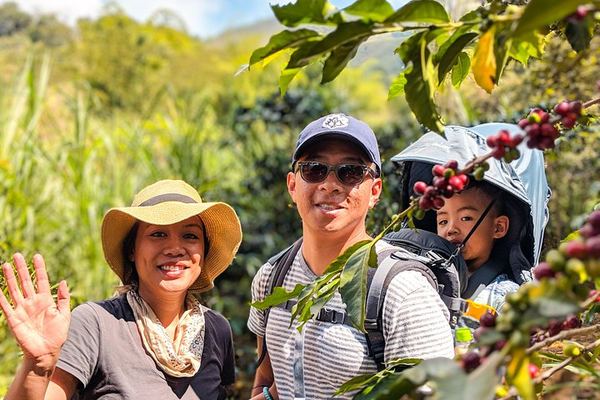
A Coffee Farm Inside the City, Then the Roastery Lab
Twenty-five minutes from El Poblado there is a working organic coffee farm. Pick the cherries there, then taste Q-graded cups at a specialty micro-roastery.
Ratings collected by Viator and Tripadvisor
The questions behind the question
Are food tours worth it?
It depends on what the tour is for in that particular city, and it is almost never the food. Across the 429 experiences on this site the service on offer is one of four: the price, in a city where prices are not written; the door, where rooms are small and closed; a licensed guide, where guiding is regulated and unlicensed guides are a known problem; or the drive, where the thing you came for is two hours out of town. Where none of the four applies, and San Sebastián is the clearest example, a guided evening is a meal with commentary at two and a half times the catalogue median.
Is a pintxos tour in San Sebastián worth the money?
The twenty listings here have a median of €165, against €69 across the catalogue, and the Parte Vieja is the easiest bar crawl in Spain to do alone. What a guided evening genuinely adds is a reserved seat at counters that are standing room by nine o'clock, and somebody to order for you when every counter is loaded and looks identical. If those two are worth €165 to you on your first night, book it. If you are staying four nights, do one bar yourself first and then decide.
How much should a food tour cost?
The median across the 429 experiences here is €69, or €19.70 an hour, counted on 5 September 2026. City medians on the pages behind this article run from €25 in Hanoi to €165 in San Sebastián. The hourly figure is the more useful one when you are comparing, because a nine-hour Douro day at €89 and a three-hour pintxos crawl at €165 are not the same purchase at all.
Is a food tour better on the first day or the last day of a trip?
The first, and forum regulars are unusually consistent about it. Everything a tour gives you compounds over the days that follow: the prices, the bar you want to return to, the neighbourhood you now know how to book in. On the last night there is nothing left for that knowledge to do, and the tour becomes an expensive dinner.
Do you get enough food on a food tour for it to count as a meal?
Usually yes, and that is not the right test. Operators generally build three hours to stand in for a main meal, and some say so outright: one Porto walk instructs you to arrive extremely hungry because it replaces lunch and dinner. The complaint that recurs is different, that the food was worth a fraction of the price. One traveller on the Rick Steves forum put it at under 25% of what he paid in Lisbon. That is one person's estimate in one thread, not a measurement, and what it really records is a tour that delivered none of the four services.
Should you book a food tour if you already know the city?
Only for the door or the licence. Local prices and neighbourhood orientation are things a returning visitor already owns, and paying again for them is the commonest way to waste the money. Access to rooms that will not seat strangers does not expire with familiarity, and neither does a registered guide in a city where unregistered ones are the problem.
The criteria, city by city
This piece names the four things and prices them. The guide behind it sets out how to judge a single listing before you pay for it.
Data verified on . Catalogue counted 30 September 2026 for Marrakech, Medellín, Porto and San Sebastián; the rest on 5 September. Forum posts opened and dated in the text.